
Login

– Before you continue reading –

Not only do we know almost everything about kombucha, we also brew it!

Our 8-times award-winning Raw Kombucha combines millions of active cultures with smart organic ingredients and vitamin C. Thirsty yet? Visit our shop and see for yourself!

Try Kombuchery
Editorial Note: This article deals with general scientific findings on kombucha and not with Kombuchery products. Scientific findings and study results are not automatically transferable to individual foods or products. The article does not replace medical or nutritional advice and is not to be understood as a health-related statement about specific foods or products.

The content is based on scientific literature, publicly available sources, and the author's assessment, and does not claim to be exhaustive. New studies may confirm, supplement, restrict, or refute existing findings. Scientific publications should therefore always be considered in the overall context of the available evidence.

Studies generally refer to the specific conditions, ingredients, microorganisms, dosages, manufacturing processes, and groups of people investigated. The presented results cannot therefore be readily transferred to other foods, recipes, manufacturing processes, or products.

No statements about the effects, properties, or health benefits of specific foods or products can be derived from the information presented.

Health-related claims for foods in the European Union are subject to the applicable legal requirements. The presentation of scientific research is therefore not to be equated with a permissible health-related claim about a food or product.

If you would like to delve deeper into a topic, we recommend consulting the scientific sources linked in the article and other independent specialist literature to gain as comprehensive an understanding as possible of the current state of research.

In prehistoric times, people in Europe primarily ate raw plant parts, wild vegetables, and fruits. With the advent of hunting and fishing, meat, fish, and seafood enriched their diet. Methods such as curing, smoking, or drying helped to preserve food, meaning to conserve it and build up stores for leaner times. Only in modern times were various methods developed to preserve food, including pasteurization. The pasteurization process is best known for foods such as dairy products or beverages. 

What happens during this process? And what are the advantages and disadvantages of pasteurization? How does pasteurization affect kombucha? You can find the answers to these questions in this article.

These methods preserve food

Pasteurizing

The simplest method to extend the shelf life of food is heat treatment. This kills harmful microorganisms or pathogenic bacteria, such as salmonella. This gently preserves products. However, pasteurized foods do not have an unlimited shelf life, as they are not sterile, but only low in germs. This method extends shelf life; depending on temperature, duration, and food, the content of individual heat-sensitive ingredients can change.

During pasteurization, food is heated for a short time (from a few seconds to a few minutes) to a temperature of at least 60 °C. The core temperature of pasteurization varies depending on the process - but never reaches 100 °C. The pasteurization process was named after its developer, the French chemist Louis Pasteur. In the mid-19th century, he realized that short-term heating could neutralize germs and thus make food last longer.

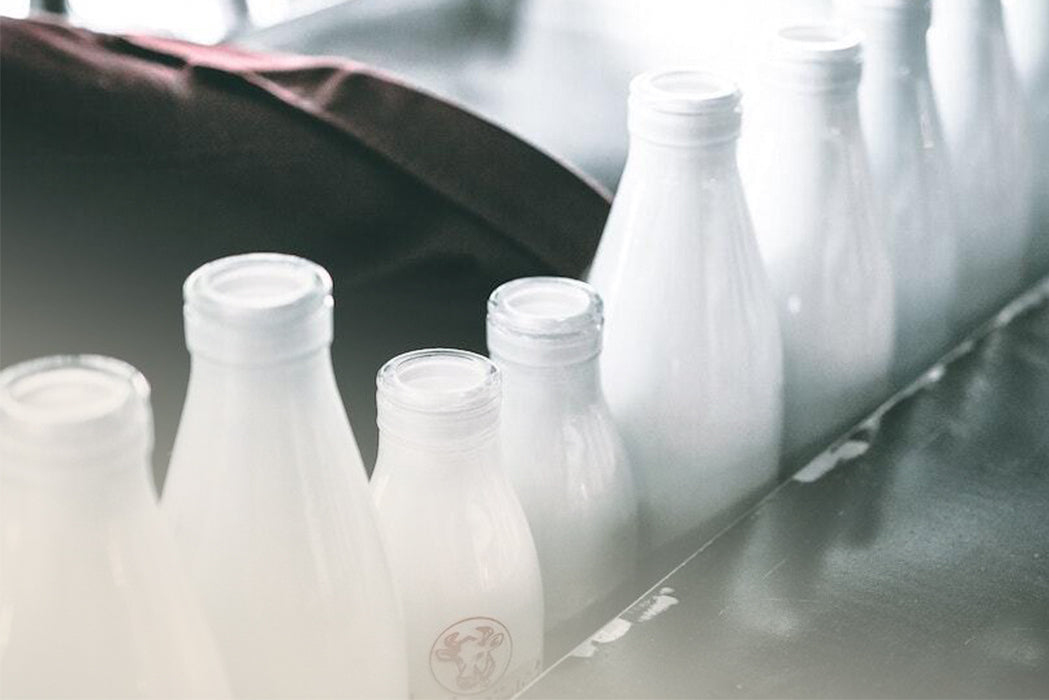
Many types of cheese, for example, are made from pasteurized milk; others from raw milk.

Sterilizing and Ultra-High Temperature Processing (UHT)

Heating above 100 °C is sterilization. After this heat treatment, food can be stored significantly longer. However, this method means a loss of taste and nutrients. The difference between "ultra-high temperature processed" and "sterilized" milk lies in the heating process and thus also in the minimum shelf life of unopened packages.

Ultra-high temperature processed milk, so-called UHT milk, is briefly heated to at least 135 °C and filled aseptically. It can be stored unopened for at least six to eight weeks.

Sterilized milk is heated to about 110 °C for 20 to 30 minutes. It can be stored unopened for up to a year. This process is used significantly less often, as the vitamin loss is much higher than with UHT milk. It is also inferior in taste to UHT milk. Labeling for sterilization is not required. You can only infer this from the long shelf life compared to pasteurized milk.

Homogenizing

Homogenization involves reducing the size of differently sized particles in a liquid – this allows them to combine better. Homogenization, for example, prevents a cream layer from forming on milk. In this process, milk is forced through a fine nozzle at high pressure. The milk fat contained therein breaks down into tiny globules and distributes homogenously (evenly) in the milk liquid. Homogenization is often used in combination with pasteurization, sterilization, or ultra-high temperature processing.

Fermenting

Fermentation is a biological method for preserving food. During fermentation, various microorganisms, organic acids, and other natural fermentation products can arise depending on the culture.

About one-third of our food is produced through fermentation. This includes, for example, bread, fermented dairy, meat, and pickled vegetable products, such as sauerkraut or kimchi, kombucha, or alcoholic beverages like beer and spirits. The advantages of fermentation include the formation of aromas and flavors, the breakdown of harmful ingredients, and the extension of shelf life. The principle: Organic substances are converted into acid, gases, or alcohol. This uses raw material-specific enzymes and microorganisms – such as bacteria or yeasts.

Which foods are pasteurized?

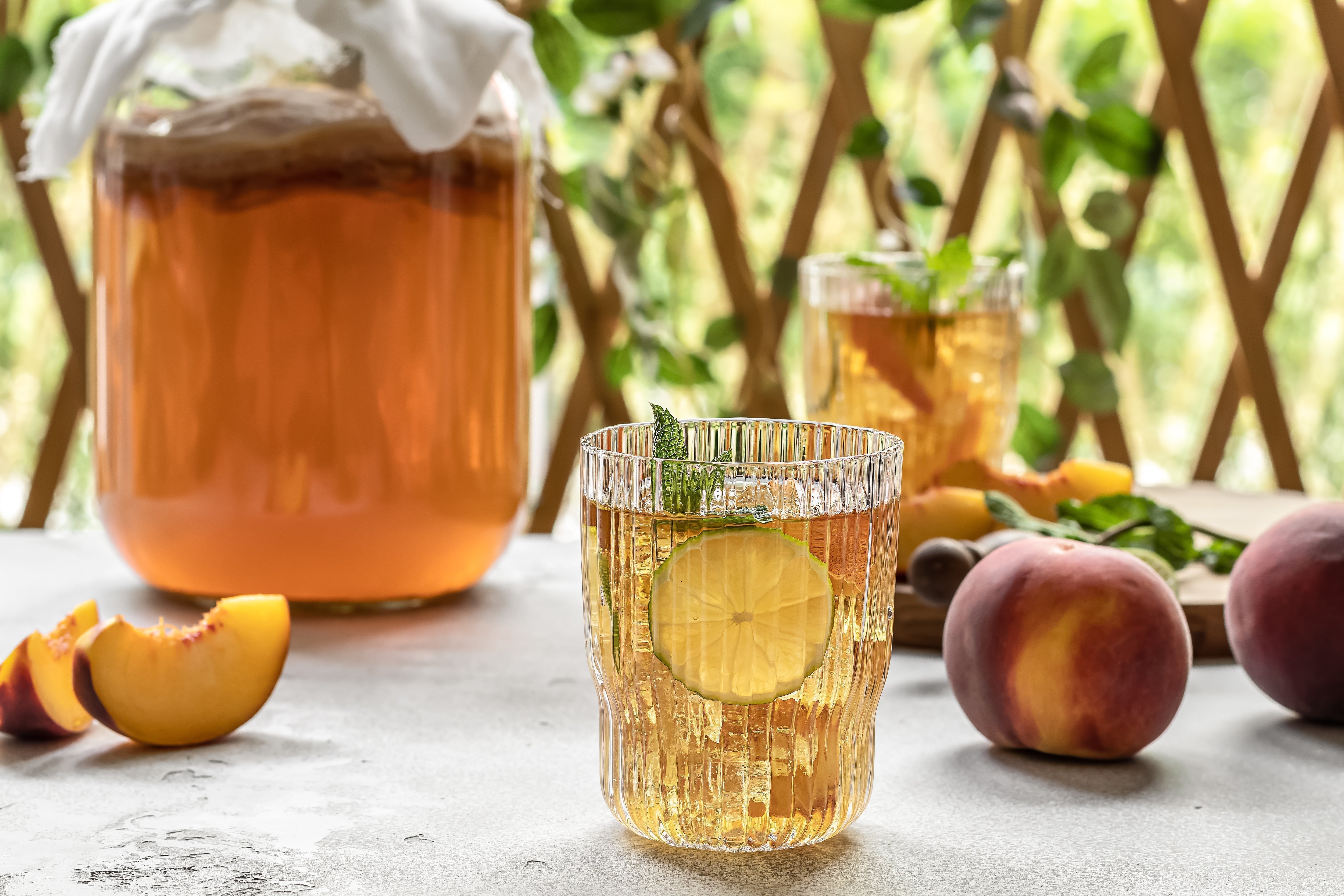
Pasteurization is suitable for liquid foods. This process is best known for milk and dairy products. But also liquid eggs, fruit and vegetable juices, canned fruits, and prepared meals are subjected to such heat treatment. Pasteurization is often combined with other preservation methods. For beverages, this is done, for example, by lowering the pH value and by light-protective, airtight packaging. As long as these are not opened, additional cooling is not necessary. Examples include fruit and vegetable juices or other beverages, such as lemonades or even kombucha.

Pasteurized Kombucha vs. Raw Kombucha

With kombucha, there is an important difference in processing. Some manufacturers pasteurize their kombucha after fermentation to microbiologically stabilize it.

Through heat treatment, heat-sensitive living microorganisms are inactivated. In contrast, with a raw and unpasteurized kombucha, living cultures can still be present in the finished drink.

Pasteurization thus primarily changes the microbiological state of the beverage. Other components such as tea, organic acids, or flavor components do not automatically disappear.

Those who value living cultures should therefore look for terms such as raw, unpasteurized, or active cultures when buying.
2 comments

    • Kombuchery
    • October 15, 2024 at 10:31 am

    Hallo liebe Malena, unser Kombucha ist immer roh und unpasteurisiert – also mit aktiven Mikroorganismen & Nährstoffen.

    • Malena
    • October 15, 2024 at 10:26 am

    Hallo,

    vielen Dank für den informativen Artikel.
    Ist euer kombucha-Getränk nun pasteurisiert oder nicht? Oder nur gefiltert?

    Danke vorab für die Antwort!

Leave a comment

Please note, comments need to be approved before they are published.

This site is protected by hCaptcha and the hCaptcha Privacy Policy and Terms of Service apply.

Recommended articles for you

More of my articles, from A, like alcohol-free kombucha cocktails, to Z, like lemon-ginger kombucha, can be found on our Kombuchery blog. Let's learn more about kombucha together!

View all

Mate Tee Trinkhalm Mateteegefaess

Mate Kombucha: What you should know about mate tea, caffeine, and yerba mate

Mate Tea Meets Kombucha Mate and kombucha can be excitingly combined in terms of taste: the characteristic tart, slightly smoky taste of mate meets the typical sweet and sour note of fermented kombucha. Mate tea has a long tradition, especially...

Read moreabout Mate Kombucha: What you should know about mate tea, caffeine, and yerba mate

Schwangere Frau im Anschnitt grosser Bauch Wiese Abendsonne

Is kombucha suitable for pregnant women and children? All about the alcohol content

Who should drink Kombucha? Kombucha is a fermented tea drink. Due to fermentation, small amounts of alcohol can be produced. In addition, depending on the tea used, kombucha can contain caffeine. But how exactly does alcohol form in kombucha? How...

Read moreabout Is kombucha suitable for pregnant women and children? All about the alcohol content

Warum kann Kombucha Alkohol enthalten? Alle Fragen zum Alkoholgehalt im Überblick

Why Can Kombucha Contain Alcohol? All Your Questions About Alcohol Content Answered

How is alcohol formed in kombucha? Is there kombucha without alcohol? Can pregnant women drink kombucha? Can I make alcohol-free kombucha? All your questions about kombucha and alcohol answered here!

Read moreabout Why Can Kombucha Contain Alcohol? All Your Questions About Alcohol Content Answered

10 Fakten zu Kombucha kaufen oder selber brauen Inhaltsstoffe

Fermented Tea Drink – 10 Interesting Kombucha Facts

What else you should know about Kombucha 1. Kombucha shelf life How long kombucha lasts depends on its production, bottling, and storage. Especially with homemade kombucha, a general shelf life of several months cannot be guaranteed. Even after bottling, the...

Read moreabout Fermented Tea Drink – 10 Interesting Kombucha Facts

Kombucha, Wasserkefir & funktionale Limonaden im Vergleich

Kombucha, Water Kefir & Functional Lemonades in Comparison

In recent years, the beverage market has changed significantly. In addition to classic soft drinks, an increasing number of fermented beverages and so-called functional sodas are now available in supermarkets. Kombucha, water kefir, and modern sodas with added fiber or...

Read moreabout Kombucha, Water Kefir & Functional Lemonades in Comparison

Kombucha Guide Berlin: 10 Cafés & Restaurants in 5 Bezirken

Kombucha Guide Berlin: 10 Cafés & Restaurants in 5 Districts

Urban Wellness in Berlin: 5 Neighborhoods Where You'll Find Really Good Kombucha Berlin is one of Europe's most exciting cities when it comes to modern food and drink culture. Kombucha is no longer a niche product here, but part of...

Read moreabout Kombucha Guide Berlin: 10 Cafés & Restaurants in 5 Districts

Kombucha und seine Wirkung: Wissenschaftliche Studien zu Inhaltsstoffen, Fermentation und Gesundheit

Kombucha and Its Effects: Scientific Studies on Ingredients, Fermentation, and Health

Kombucha is one of the most intensively studied fermented beverages in recent years. Modern microbiological, nutritional, and clinical studies show that the beverage has an exceptionally complex biochemical composition. During fermentation, numerous bioactive compounds are formed, including organic acids, polyphenols,...

Read moreabout Kombucha and Its Effects: Scientific Studies on Ingredients, Fermentation, and Health

World Kombucha Day am 21. Februar: Geschichte, Fakten & Tipps zum Feiern

World Kombucha Day on February 21: History, Facts & Tips for Celebrating

Celebrate the effervescent history of kombucha Every year on February 21, kombucha fans worldwide celebrate World Kombucha Day. But why exactly does this day exist? It's simple: it's a tribute to a drink that has delighted, inspired, and refreshed people...

Read moreabout World Kombucha Day on February 21: History, Facts & Tips for Celebrating

Nahrungsergänzungsmittel: Einsatz, Inhaltsstoffe & Risiken

Dietary Supplements: Use, Ingredients & Risks

Dietary Supplements: When They Can Be Useful and What to Consider In everyday life, it is not always possible to create a varied meal. Dietary supplements can specifically supplement the diet with individual nutrients, especially when an increased need or...

Read moreabout Dietary Supplements: Use, Ingredients & Risks

*Vitamin C contributes to the normal function of the immune system, normal energy metabolism, and the protection of cells from oxidative stress.
  • Vitamin C contributes to the normal function of the immune system.
  • Vitamin C contributes to normal psychological function.
  • Vitamin C contributes to normal energy-yielding metabolism.
  • Vitamin C contributes to the reduction of tiredness and fatigue.
  • Vitamin C contributes to the normal functioning of the nervous system.
  • Vitamin C contributes to the protection of cells from oxidative stress.
  • Vitamin C contributes to the regeneration of the reduced form of vitamin E.
  • Vitamin C contributes to normal collagen formation for the normal function of the skin.
  • Vitamin C contributes to normal collagen formation for the normal function of blood vessels.
  • Vitamin C contributes to normal collagen formation for the normal function of bones, cartilage, teeth and gums.
  • Vitamin C increases iron absorption.