


Scoby sounds a bit like a wonderful mythical creature from a fantasy world. In reality, however, it is the kombucha culture. What exactly does the name stand for? How do Scobys work in detail? You can find answers to these and many more questions about this "wonder mushroom" here, including how to grow your own little mushroom!
First things first: What is Kombucha anyway?
Kombucha is a fermented tea drink with centuries of tradition. With the help of the Scoby - also known as the kombucha mushroom - tea, sugar, water, and a starter liquid are transformed into a delicious beverage. The Scobys, with their many tiny microorganisms and enzymes, do a great job within 7-14 days. From four simple ingredients, a living refreshing drink with organic acids, various fermentation products and - depending on the production - living microorganisms is created at the end of the fermentation process. Kombucha contains, for example, various organic acids, vitamins and trace elements. Would you like to know more about the topic and microorganisms? You can find more detailed information about Kombucha on our KOMBUCHERY blog.
What does SCOBY stand for?
You have probably already wondered what the name stands for or where it comes from. Scoby is the English abbreviation for SYMBIOTIC CULTURE OF BACTERIA AND YEASTS. So, simply put, a symbiosis of bacteria and yeast cultures. The culture is also often referred to as a mushroom, wonder mushroom, or kombucha mother. SCOBYs can be stored in a suitable container with sufficient acidic starter liquid. How long a culture remains usable depends on hygiene, acidity, storage conditions, and the condition of the culture. If mold or other noticeable changes occur, it should be discarded. SCOBYs, or kombucha cultures, form the basis for the fermentation of our unpasteurized Raw Kombucha.
What is a Scoby made of?
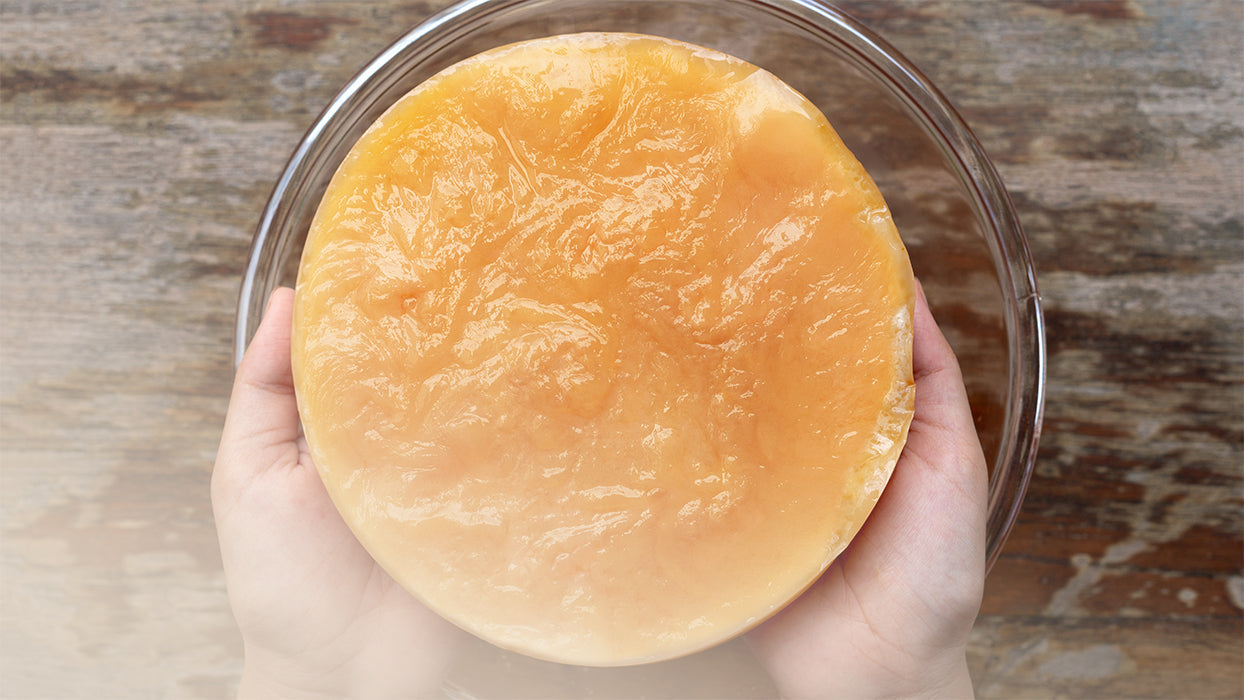
The SCOBY is actually neither a fungus nor a lichen. Its visible structure consists predominantly of bacterial cellulose, in which bacteria and yeasts of the kombucha culture live together. It has a whitish-beige substance and takes on various round shapes. In this substance, various microorganisms, bacteria (e.g. lactic acid bacteria) and yeasts live together in a kind of symbiosis. They practically help each other to survive. This is also held together by cellulose. Yeasts can metabolize sugar into ethanol and carbon dioxide, among other things. Certain acetic acid bacteria can then convert ethanol into organic acids such as acetic acid under the influence of oxygen. A pretty ingenious concept of nature!
At a glance:
- Cellulose
- Bacterial cultures (e.g. lactic acid and acetic acid bacteria)
- Yeast cultures
- Microorganisms
- Interaction in a kind of symbiosis
This is what a Kombucha Scoby looks like
One thing it almost always has in common is its round, pancake-like shape. It consists of whitish, gelatinous layers. These feel a bit slimy and take some getting used to. Depending on the type of tea used, its color can vary from beige to dark brown to light pink. Its surface can be smooth, but also very uneven. During the fermentation process, holes or small bulges can even form – that's completely normal! Depending on the liquid content, its consistency is either more or less glassy. If you grow your own Scobys at home, they are initially thin. They form new layers day by day and become thicker and thicker. Scobys also smell slightly of vinegar.

Check your Scoby: Is this normal?You're not quite sure if your tea mushroom is still healthy? We'll help you interpret your little Scobys. A few simple checks and you're on the safe side. Your little care guide! My Scoby ...... has small black or green spots: Warning, mold – please discard. ...has various colors: this can happen and is completely normal. ...has small white bubbles in the initial stage: This can also happen and doesn't necessarily mean mold. ...is at the bottom of the jar: Don't panic! In the worst case, a new kombucha scoby will form on the surface. ...is dark brown and falling apart: Your mushroom is a bit exhausted and should be sent into well-deserved retirement. ...my Scobys smell of vinegar: This is completely normal, healthy Scobys should smell like this. The starter liquid also usually has a more intense smell. ...my Scoby sinks to the bottom of the jar: Don't worry! This happens, and before you know it, a new Scoby will form on the cover liquid! |
This is what a healthy Scoby looks like!

This is what mold on a kombucha culture looks like!

From Scoby to Kombucha: How the Tea Mushroom Works
- Similar to kefir and kefir grains, kombucha is produced during fermentation with the help of a culture.
- The culture, consisting of bacteria and yeasts, uses the sweetened tea as a nutrient solution.
- A tea infusion as a starter made from black tea or a mixture with green tea is common.
- The kombucha tea mushroom first spreads on the nutrient solution in the vessel. In some cases, the mushroom sinks to the bottom. Then a new one slowly forms on the surface and the lower one usually stops growing. Given some time, it forms new gelatinous layers and becomes increasingly thick.
- The yeasts first metabolize sugar into alcohol.
- Subsequently, the bacteria take over and metabolize the alcohol and various substances from the tea into organic acids and other valuable nutrients.
The symbiosis with its unusual appearance really does an amazing job!
Making kombucha yourself: Here's how [Recipe]: https://kombuchery.de/blogs/kombucha/selber-machen-fuer-beginner
Where can I get a Scoby for Kombucha?
Now that you know so much about the wonder mushroom, you're probably wondering how to get one for your home. It's not difficult and there are several ways to do it.
Make your own Scoby
Many people don't know this, but growing your own kombucha mushroom is not difficult at all. All you need is sugar, tea, water, and unpasteurized kombucha as a starter liquid (e.g., our Original). This way you can save money and observe the fermentation process from the very beginning. You can find detailed instructions for making it at home here.
Making the Kombucha Mushroom [Instructions]: https://kombuchery.de/blogs/kombucha/kombucha-selber-machen-rezept
Buy Scoby
Various providers have virtually made a business out of kombucha scoby cultivation and sell them and the so-called starter liquid online. This way you can save time that you would otherwise spend culturing the mushroom yourself. These are then shipped in a starter liquid. Which is actually just very acidic unpasteurized kombucha.
Get a Scoby as a gift
If you're really lucky, you have someone in your circle of friends who can spare a wonder mushroom and some starter liquid for you. With this and the kombucha scoby, you can then tackle your new batch.
Storing Scoby for Kombucha
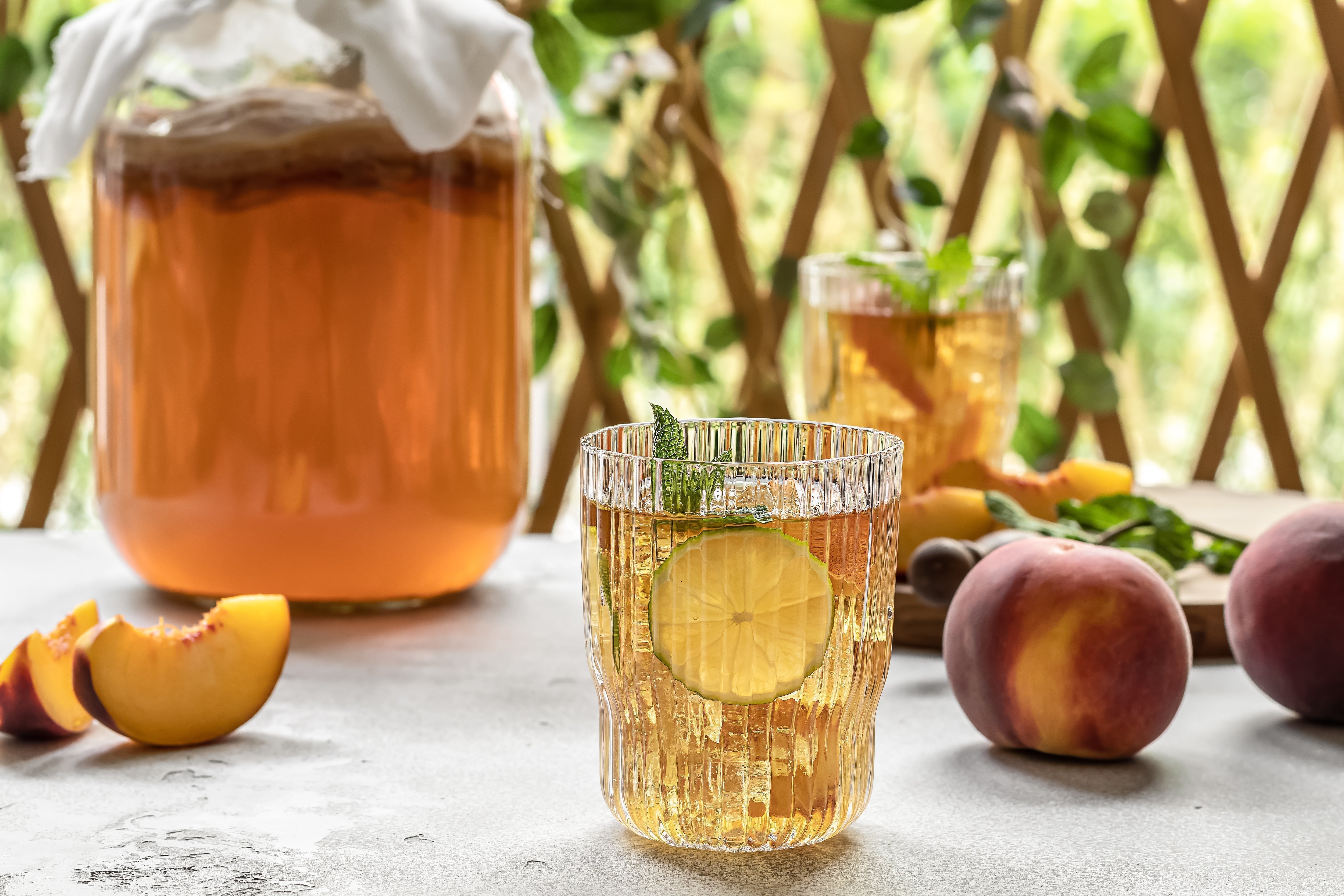
The great thing about a kombucha mushroom is that you can use it more than once for fermentation. Well cared for and stored, it can bring you joy for quite some time. Kombucha lovers and connoisseurs affectionately call the storage place a hotel. A place where the kombucha mushroom feels at home and waits for you for the next fermentation. The hotel, simply put, is a large glass filled with starter liquid. Unpasteurized sour kombucha serves as the starter liquid. The glass should be stored at room temperature. Your kombucha mushroom should be completely covered with starter liquid and covered with an air-permeable cloth. A pH value of 2.3 to 3.5 is ideal for your Scobys. The low pH value ensures that germs can hardly multiply.
At a glance:
- store at room temperature
- no direct sunlight
- cover glass with light cloth
- tea mushroom should be covered by starter liquid
- feed occasionally with a little sugar if necessary
- can also be stored in the refrigerator in a closed jar (must be reactivated afterwards)
- observe care instructions
Everything about storing in the Scoby Hotel: https://kombuchery.de/blogs/kombucha/scoby-hotel-lagerung-und-haltbarkeit
Scoby or not Scoby – the mushroom makes it bubble!
As you may have noticed, the SCOBY is the heart of kombucha fermentation. With the help of its community of yeasts and bacteria, sweetened tea is transformed into a fermented tea beverage. However, the presence of living microorganisms does not automatically make a food a probiotic. With a little patience, you can cultivate your own SCOBY at home and ferment kombucha with it. If that's too much effort for you, that's no problem. We already ferment our Raw Kombucha for you.
FAQs about Scoby and Kombucha
How long does it take to grow my own Scobys?
Depending on the conditions, it can take 6 to 21 days for Scobys to form. In winter, it often takes longer than in summer.
Can you accidentally kill the mushroom?
The tea mushroom can withstand a lot. You can even use scissors to remove yeast strands or similar. However, it can suffer under various conditions and become inactive and sluggish. Firstly, it should not be too thick. Also, never wash the vessel it lives in with dish soap beforehand (preferably with vinegar). Ensure a hygienic environment free of fruit flies. Do not place in hot tea.
Can you eat Scoby?
In fact, you can even eat Scobys. Whether as an ingredient in a smoothie or dried as jerky. Some kombucha hardliners also use it as a substitute for raw fish.
How does a Scoby form?
Through budding and/or division, the complex structure of cellulose, yeasts, and bacteria is formed during fermentation. A gelatinous layer first forms on the surface of the sweetened tea. Over time, new layers form continuously.
Is it dangerous to grow Scoby yourself?
A SCOBY can be grown at home; clean work and careful checking for mold or other noticeable changes are important. It is important to observe all hygiene regulations. If the mushroom is infected with mold, you must of course be very careful and prefer to dispose of it. Important: Small bubbles, foam and tea deposits are not mold, but normal results of the fermentation process.
How often can you drink kombucha?
There is no exact consumption recommendation for Kombucha. We recommend a slow approach to the tea drink. Everyone tolerates the drink differently well. How often and in what quantity you drink Kombucha is an individual decision and depends, among other things, on your personal tolerance.
How healthy is kombucha?
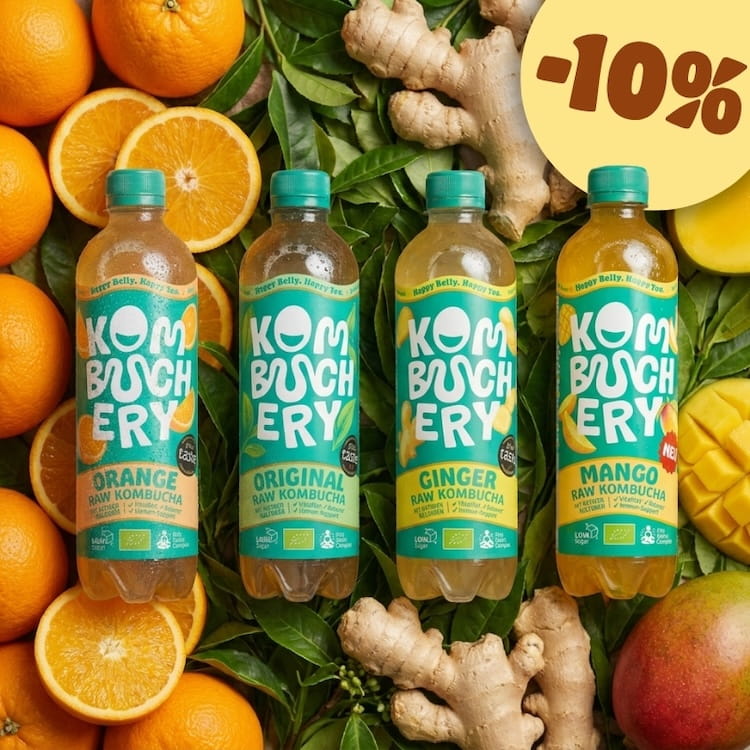
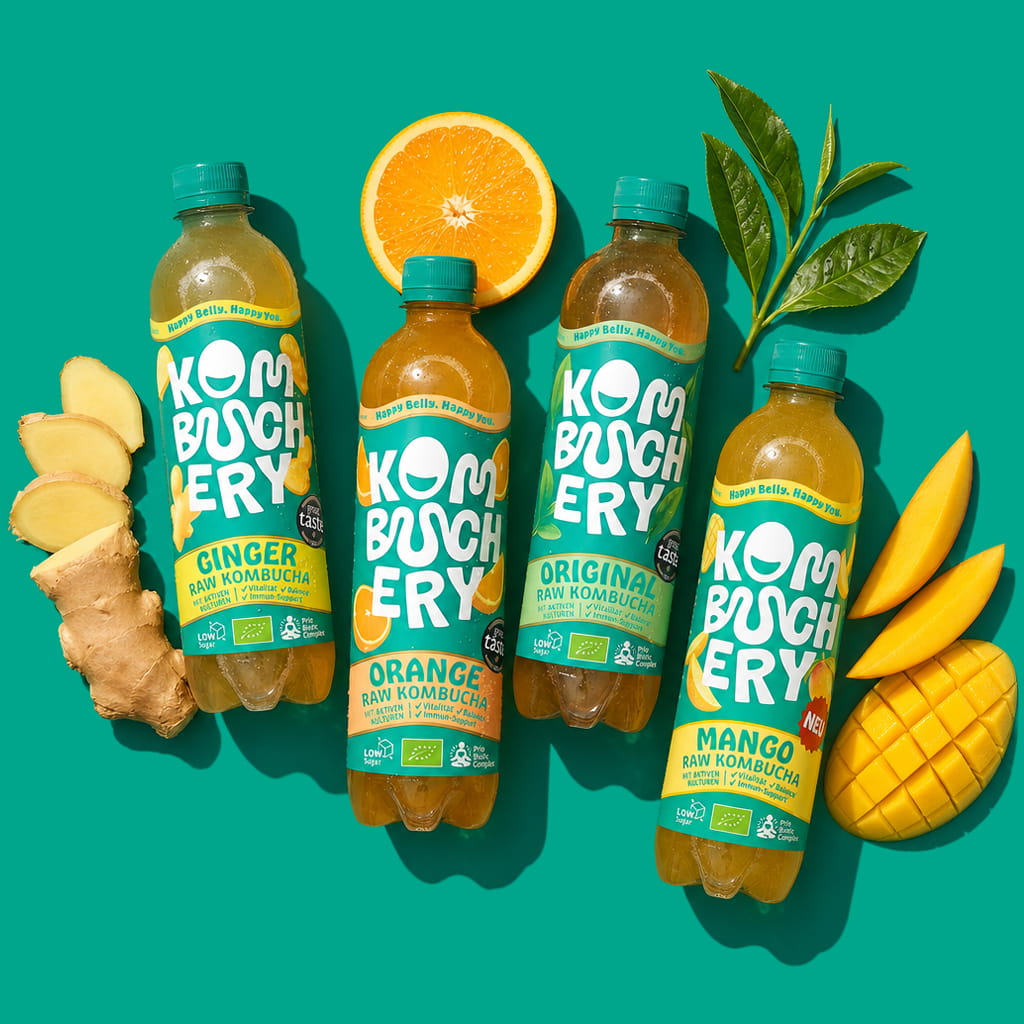
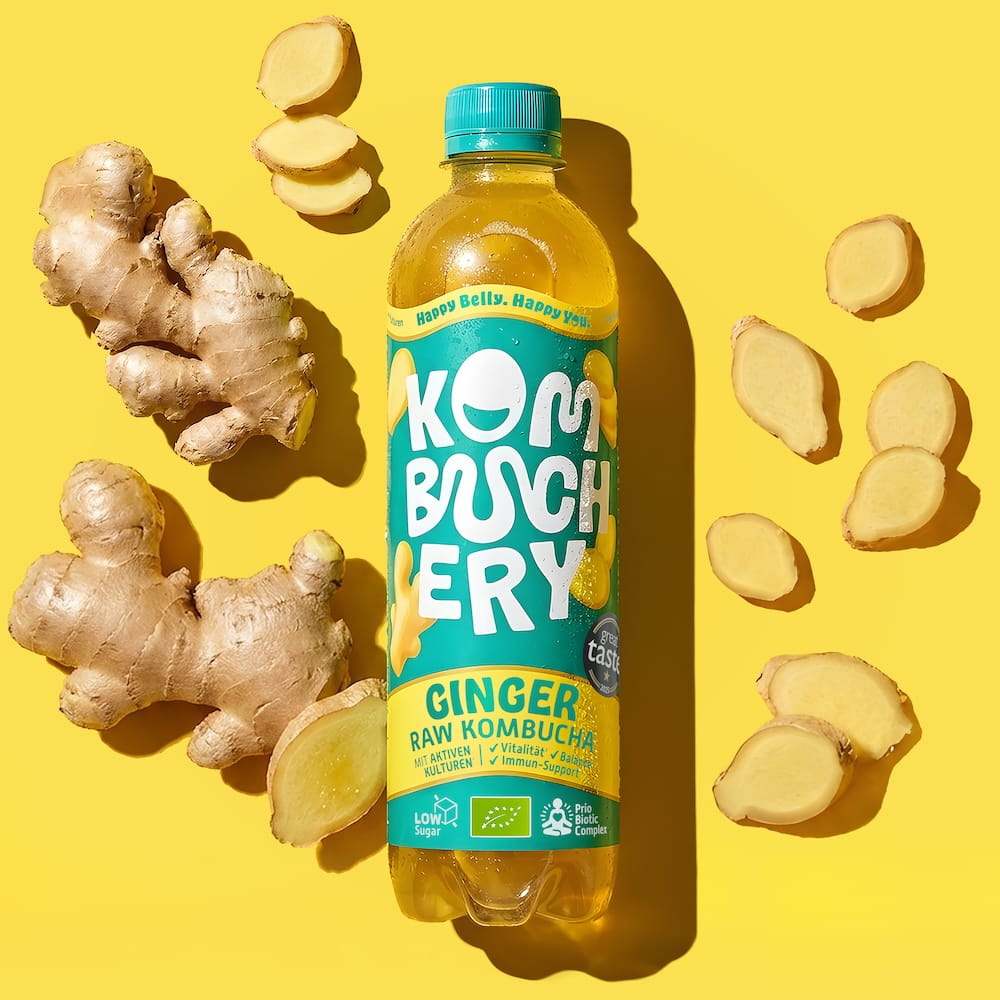
Kombucha is a fermented alternative to classic soft drinks. How a specific kombucha is to be classified nutritionally depends, among other things, on the recipe, sugar content and other ingredients. Kombuchery contains only 2.3 g of sugar per 100 ml, as well as vitamin C from acerola and millions of active cultures.



Share: